
Pivots: Step Off, Step On
Benefits:
Strengthens your dog’s Adductors and ABductors
Improves proprioception by encouraging your dog to thoughtfully move their rear feet individually
Engages your dog’s core
Improves overall balanced and coordination
Works on Forelimb Stabilization and strengthening
Equipment
A stable, elevated object like a stool or an up-sidedown rubber feed bowl
A low, stable object (like a collapsed stool) - make sure the object is shorter than your dog’s hocks
Prerequisites:
Pivot
Rear Foot Targeting
Set-Up:
Measure the distance from the top of your dog’s withers to the base of their tail, this is your dog’s body length.
The distance between the two objects (measuring from the center of each object) should match or be close to your dog’s body length measurement.
How To:
Stand in front of the raised object and toss a treat behind it.
As your dog comes into position—with their front feet on the higher object and rear feet on the lower platform—help them find a balanced stand, then reward with rapid fire cookies.
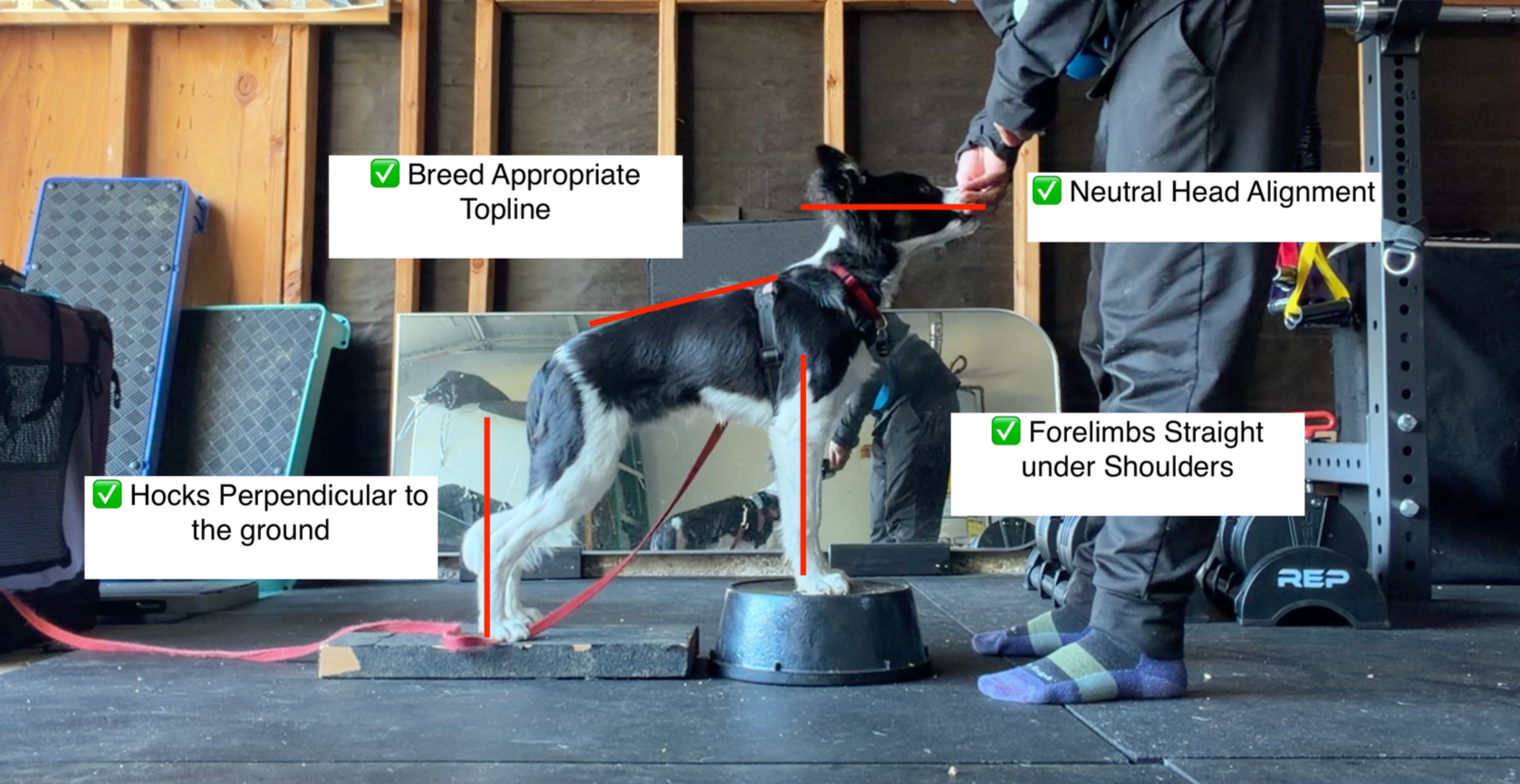
If your dog is still learning how to balance, do your best to support them. Ideally, their hocks should be as perpendicular to the ground as possible.
Choose the direction you want to work. Bring a treat to your dog’s mouth, gently turn their head in the opposite direction, and apply slight body pressure.
For example, if you want your dog to move to the left, turn their head slightly to the right and apply gentle pressure into their body.
As soon as your dog steps one rear foot off the platform, immediately release the pressure and reward with rapid-fire treats. Help them find a balanced stand in this position if needed, then ask for stillness.
At this stage, one rear foot should be off the platform while the other remains on.
After a moment of stillness, move in the opposite direction so your dog steps the lifted foot back onto the platform.
Your dog should take only ONE step off, pause in stillness, then step back onto the platform.
Work slowly, vary the duration of stillness, and pause frequently to adjust your dog’s form as needed.
1) Start with both Rear Legs on Platform.
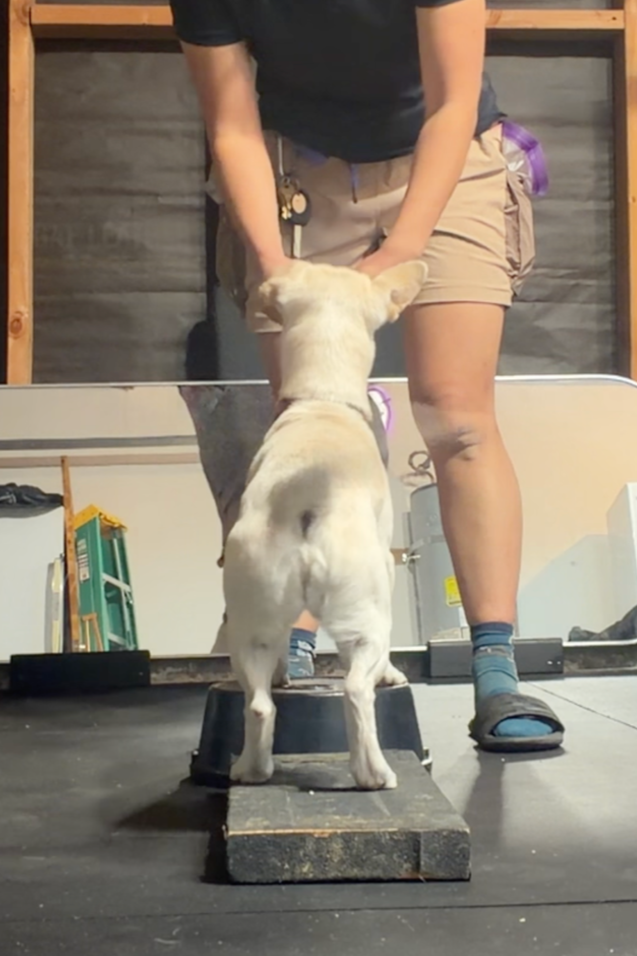
5) Return both legs onto platform before releasing your dog.
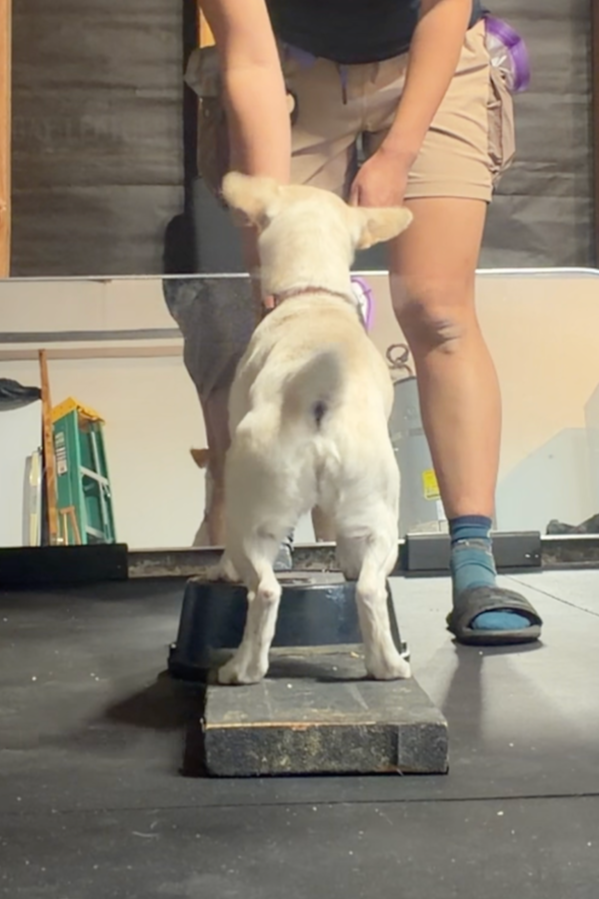
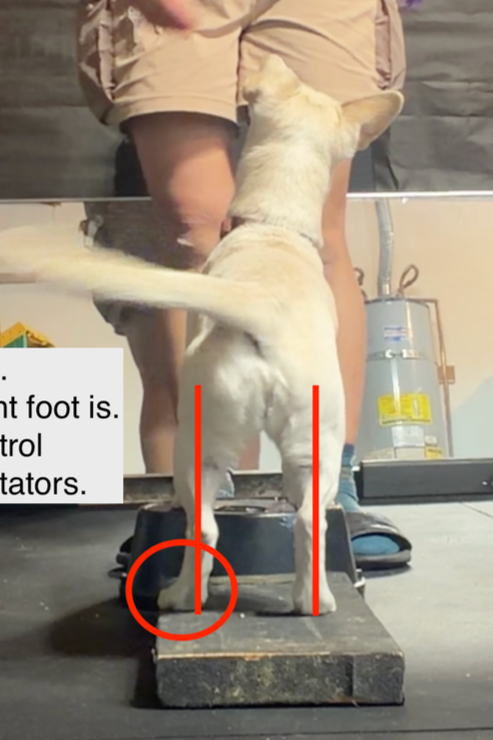
*Luna’s Left Rear foot in Photo (1) is externally rotated, which is not ideal. I would want her toes to be facing forward more, like her rear right foot is.
Luna is cow-hocked so this exercise helps improve her control and muscle balance between her external and internal hip rotators. Her form is much better than it used to be but as you can see it’s always a work in progress.
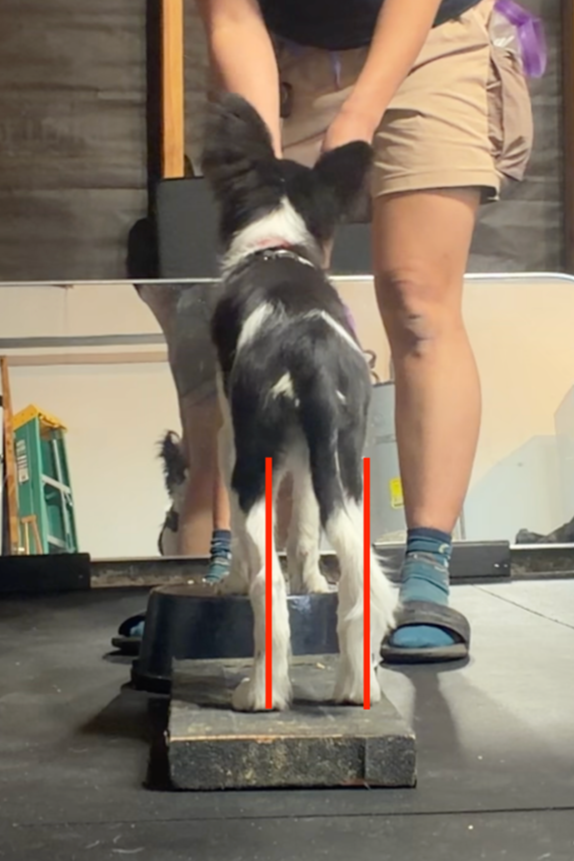
2) Pivot ONE Leg off the platform.
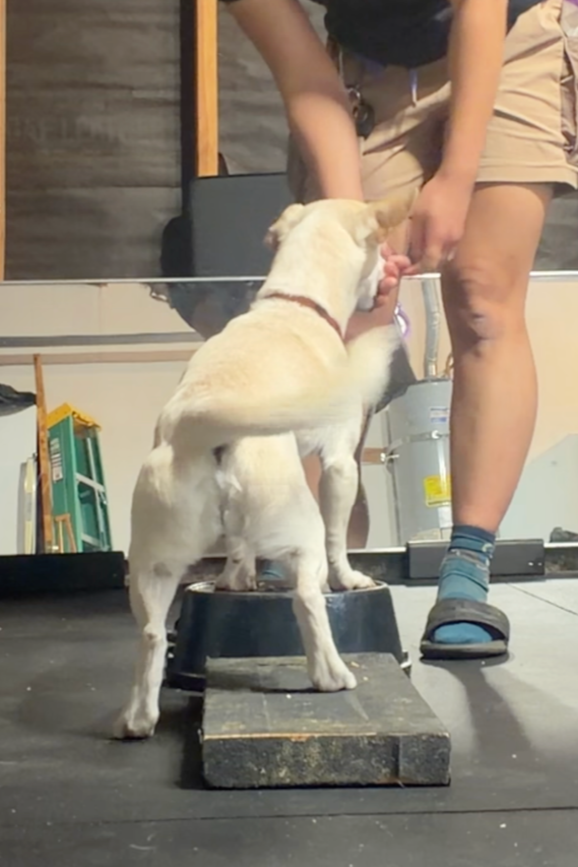
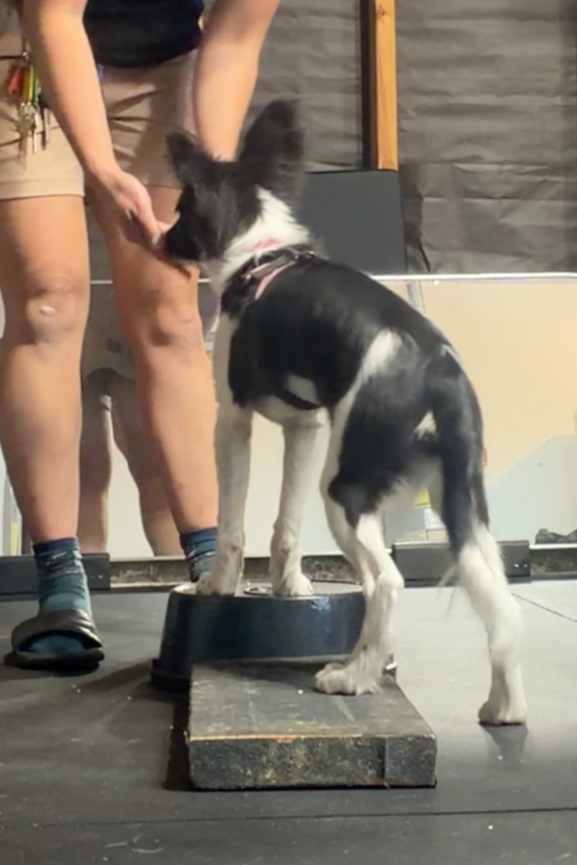
3) Step leg back onto platform
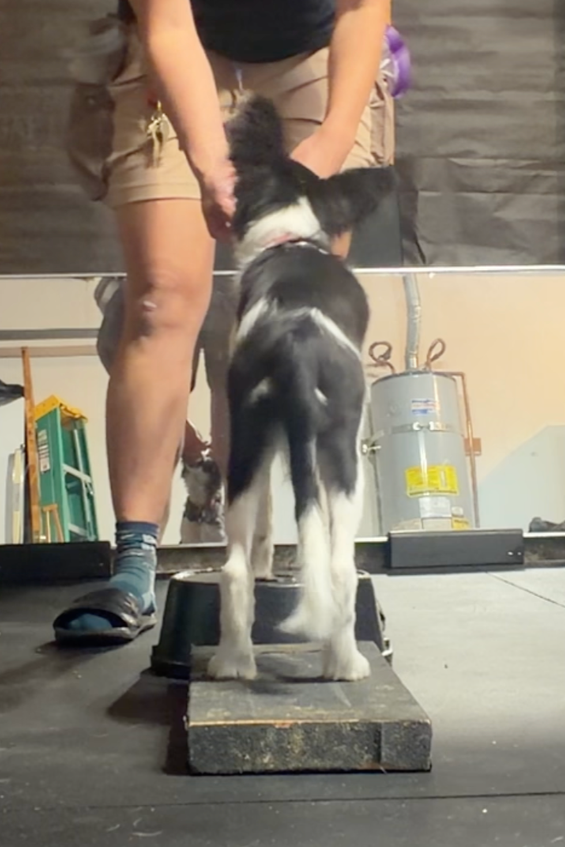
4) Pivot other leg off the platform
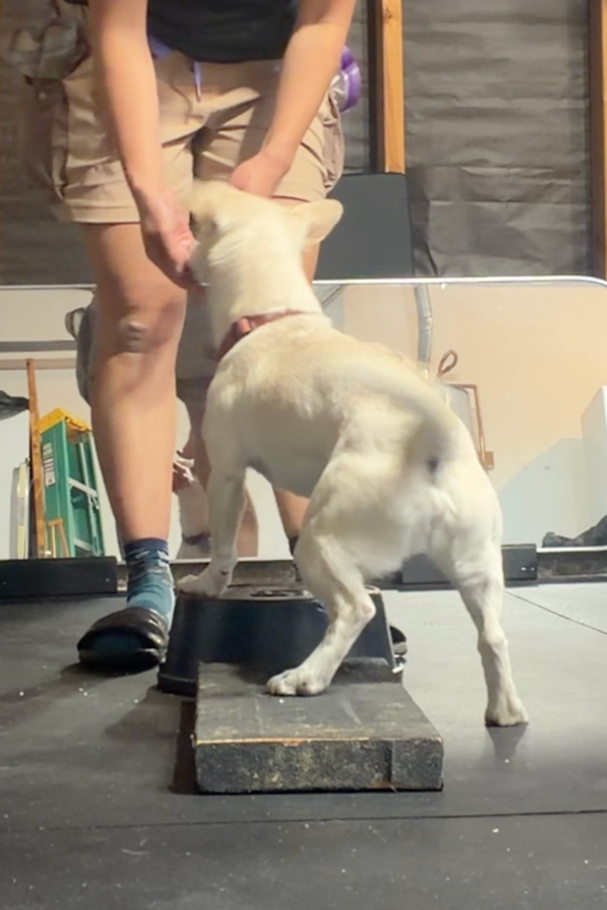
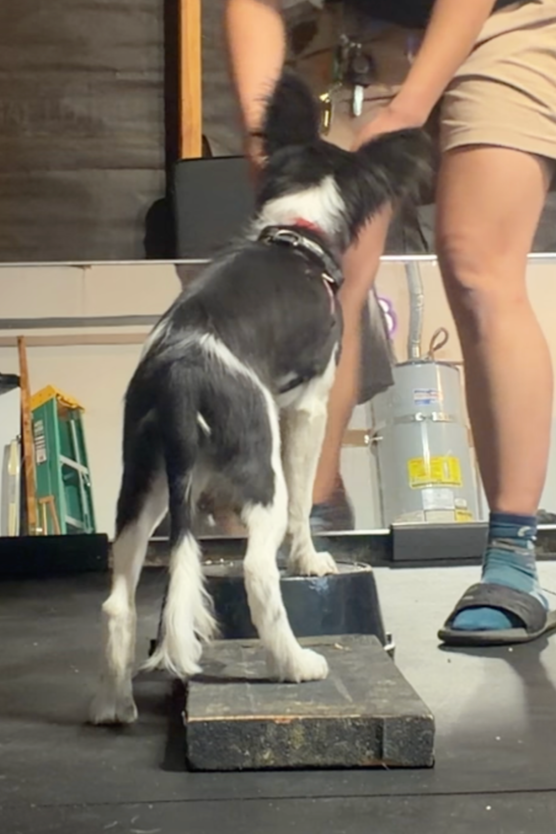
1) Start with both Rear Legs on Platform.
5) Return both legs onto platform before releasing your dog.
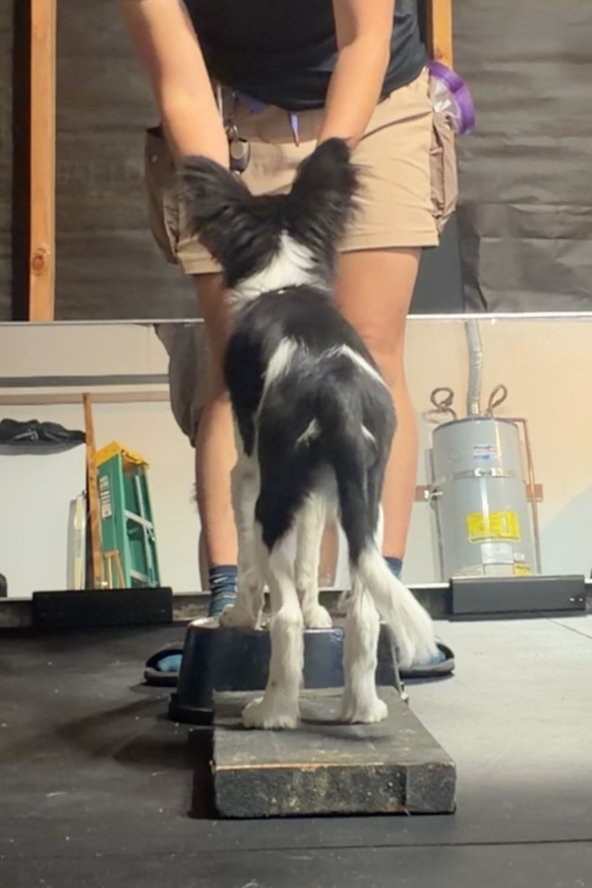
Goals:
Ideally their proper form throughout the exercise should be:
Breed Appropriate Topline
Forelimbs are held straight under shoulders and parallel to each other
Hocks are perpendicular to the ground and parallel to each other.
Your dog should step off and back onto the platform using individual rear feet, with minimal movement from the opposite rear foot and forelimbs.
This exercise teaches your dog to lead with the outside rear leg when moving in that given direction:
Right rear leg leads when moving right
Left rear leg leads when moving left
Note - One side will naturally be easier for your dog. Just like humans are left- or right-handed, dogs also have a preferred side. If you notice a clear imbalance, perform a few extra repetitions on the weaker side. Over time, your dog should become more balanced. Once both sides are even, you can return to equal reps on each side. The goal is as much symmetry as possible.
2) Pivot ONE Leg off the platform.
3) Step leg back onto platform
4) Pivot other leg off the platform